
Discover how safe building materials transport protects merchants, drivers and customers, from securing heavy loads to vehicle checks and crane safety.
Delivering building materials brings challenges that don’t arise with many other types of freight. Heavy timber packs, pallets of bricks, blocks and landscaping products all need careful handling, while delivery locations can range from busy builders’ merchant yards to restricted residential streets and construction sites.
For builders’ merchants and suppliers, choosing a transport partner isn’t simply about finding someone who can move materials from one location to another. It’s about knowing those deliveries will be handled safely and professionally.
At Building Materials Logistics (BML), we understand the practical demands of transporting construction products and why vehicle safety, load security and experienced drivers matter.
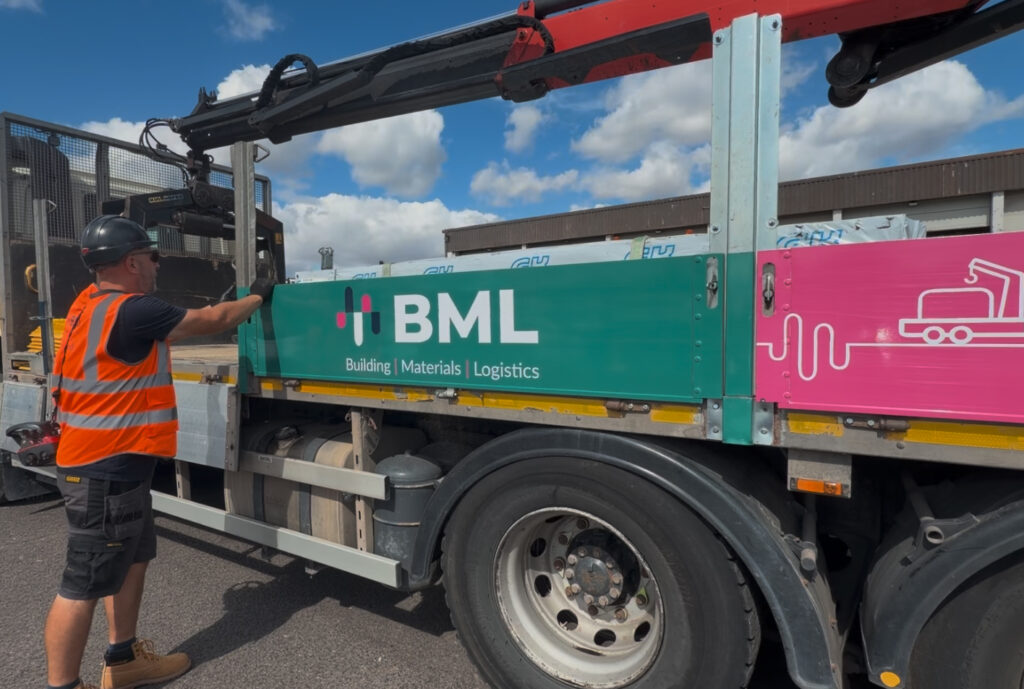
What safety checks should building materials delivery vehicles undergo?
Commercial vehicles must undergo effective daily walkaround checks, with drivers satisfying themselves that their vehicles are roadworthy before setting off. These checks cover potential defects including tyres, wheels, lights and other safety-related equipment.
For vehicles regularly making kerbside deliveries or manoeuvring around construction sites, tyre sidewall damage is a particular concern. Loose wheel nuts, warning lights and unusual noises must also be taken seriously.
Identifying problems before departure helps prevent breakdowns, roadside prohibitions and disruption to customers.
How should building materials be secured during transport?
Load security is particularly important when transporting heavy or awkward construction products.
Timber packs, bricks, blocks and other palletised materials must be properly restrained to prevent dangerous movement or materials falling from the vehicle.
The type of vehicle matters too. Curtainsided vehicles don’t automatically provide adequate load restraint, as many curtains are designed primarily for weather protection.
Drivers need suitable securing equipment, appropriate training and sufficient time to check their loads before departure. Even small amounts of loose material escaping from a vehicle can create hazards for other road users.
Why is vehicle height important for building materials deliveries?
Vehicles fitted with cranes or other lifting equipment require particular care.
Drivers must know their vehicle’s overall travelling height, check that any required in-cab height indicator is accurate and confirm that lifting equipment is correctly stowed before moving off.
A crane left incorrectly stowed can create a serious risk when travelling beneath bridges or other overhead restrictions.
Proper route planning, awareness of vehicle dimensions and HGV-specific navigation all help reduce these risks.
What should merchants expect from a professional logistics provider?
Safe building materials transport relies on more than a roadworthy vehicle. Drivers need to understand the loads they’re carrying, the equipment they’re operating and the procedures for reporting defects or other safety concerns.
Transport operators must support them with appropriate vehicles, equipment, maintenance and clear working procedures.
At BML, our focus is on providing practical, dependable transport solutions for builders’ merchants and building materials suppliers. We understand that customers need deliveries to arrive on time, but that should never come at the expense of safety.
A successful delivery isn’t simply one that reaches its destination. It’s one that’s been planned, loaded, transported and completed safely.
Need a reliable transport partner for your building materials deliveries?
Contact Building Materials Logistics to find out how BML can support your business.